|
Women in Sportscasting:
|
By Lou Schwartz, ASA President | |
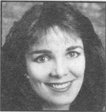
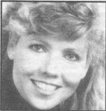
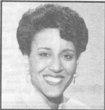
| Women have come a long way in sportscasting; from just another "Barbie-on-the-air" image to complement the sportscasting done by men, to today's qualified and respected professional hired for her skills and knowledge. In the late 1930's and early 40's, the wife of Harry Johnson, sports announcer for Central Sates Broadcasting in Omaha, Nebraska, provided color commentary during his broadcasts. Although she cannot be proven to be the first woman sportscaster, she is definitely among the earliest. Jane Chastain, Donna De Varona and Jeannie Morris are readily considered pioneers of womens' sportscasting by many. Chastain, who started her sportscasting career in the mid-60's, was the first woman to work for a large network(CBS), and thought to be the first woman to do play-by-play. Being female pioneers in sportsacsting, women have faced many more problems breaking into the field than men. Jane Chastain contended with difficulties from the male TV crew who were not ready to accept a female sportscaster. With established journalistic skills and reputation as a writer, Jeannie Morris had little problems getting into the field of sports reporting. But as a female, she was not afforded the same facilities as men. In the early 70's, assigned to cover the Minnesota Vikings vs. the Chicago Bears at the Metropolitan Stadium in Minnesota, Jeannie was not permitted to work in the press box because she was a woman. Thus, she reported the game seated above the box, outside in a blizzard. When women were finally allowed in the press box, no provisions were made for bathrooms for female reporters. They were forced to use the ones for spectators located a distance away. In the mid 70's, Phyllis George, a former Miss America worked with CBS on the pre-game show for the NFL. Although she was good on air, George had little journalistic background, thus she often presented what someone else wrote. Replacing George was Jayne Kennedy, another beautiful lady with little professional background. Neither woman was hired for their knowledge of football, but to add a feminine touch to the male dominated airwaves. Leandra Reilly of Newsport, the first woman to do play-by-play of an NBA game stated, "The networks used to pick women for their looks, but now they require more qualifications. Some may still hire a woman just because she is a woman and the network needs a minority in the field." Lesley Visser, who currently works for ESPN and ABC Sports, and who, in 1976, became the first female NFL beat writer commented, "When women(sportscasters) are given greater responsibilities and prove that they can manage them, they build a good reputation as sportscasters." Gayle Gardner is a role model for aspiring women sportscasters. Following the Phyllis George/Jane Kennedy era, Gardner entered sportscasting and changed the image women held from a novelty to a professional. She was the first female sports anchor to appear weekly on a major network and her hard work and perseverance is what got her to where she is. "No one is going to just hand you a job," says Gardner. "For women especially, this profession will never stop being a struggle with constant blows which must be taken." When women call games which do not include female athletes, the listening audience does not accept women sportscasters as readily as men. But this never stooped Suzyn Waldman, nor Gayle Sierens. Waldman was the first radio beat reporter covering the New York Yankees and the New York Knicks, the first woman announcer on a nationally televised baseball game, and the first woman to do play-by-play for the Yankees. Sierens was the first woman to do play-by-play for an NFL game in 1987. On the local level, television has been lacking in hiring women to cover sports. Linda Cohn, who started with CBS and is currently working for ESPN, finds that television lags behind radio and print in terms of offering opportunities in sports to women. ESPN, being the first national network to hire women for anchor positions, is considered the best among television networks for hiring women for sportscasting positions. In 1989, CNN followed ESPN by hiring Hannah Storm as sports anchor. CBS was one of the boldest networks in assigning significant roles to women with Lesley Visser on NFL Today; Mary Carillo on tennis; and Andrea Joyce on College Football Report. An article in Sports Illustrated(Oct. 1991)by Sally Jenkins stated that male sportscasters greatly outnumbered female sportscasters, and the imbalance between the salary, prestige and acceptance of male to female sportscasters is large. There is still a high male predominance in the sportscasting profession today, and according to Gardner, the salary difference has not improved much. In the article, Dick Ebersol, President of NBC Sports, notes that before there is a major increase of women in sportscasting and before women start earning the huge salaries, they must be able to host, do play-by-play and be as popular to the audience and sponsors as the men are. Since women's participation in sports is becoming more and more popular, and statistics show a rise in the audience, more opportunities open up for female athletes such as Mary Carillo, Donna de Varona, Ann Meyers, Cheryl Miller, and Robin Roberts to become sportscasters just as male ex-athletes have. Donna de Varona debuted as a swimming expert in 1965 at the age of 17 when she did her first sports broadcasting. Ann Meyers and Robin Roberts, both star basketball players, were able to use their knowledge and expertise in the sport during their sportscasts; such as Roberts' coverage of the 1992 Men's NCAA Final Four, and the 1992 NCAA Women's Final Four coverage by Meyers. Meyers also was the first woman to provide color commentary for an NBA team (Indiana Pacers in 1979) and the first woman to call an NBA game on network television (NBC 1997). Mary Carillo, the ex-tennis star, has also done well in sportscasting by bringing the players to life as characters. As for the future outlook for women sportscasters, different opinion have been heard. Gayle Gardner senses a backward trend, finding that after all the hard struggle, NFL shows are back to males only or male ex-athletes hired instead of professional women sportscasters. "Part of the blame is in the culture," says Jeannie Morris, who finds the feminists of the 90's not as aggressive as they were in the 70's. This means less pressure for the networks to hire females, as the women are not really fighting for the jobs anymore. Linda Cohn adds that "Today, not many women are willing to sacrifice and struggle as much as they did before, so it is more difficult to find extremely qualified and dedicated women." At this time, it seems that the most realistic route for aspiring women broadcasters is not so much in sports as it is in the cable and news industry. However, Ann Liguori has shown otherwise by owning, producing and hosting her own syndicated sports show. She is the first, and currently the only woman to do this. All sportscasters agree on one thing, and that is as a woman sportscaster, just as any other sportscaster, one must always be prepared, know the game, and remember that real sports fans know what is real and what is not. As Lesley Visser says, "The three most important things for a sportscaster are knowledge of the game, a passion for sports and the profession, and the stamina to struggle." Although it requires hard work to make it into the profession, once in, the struggle is well worth it. | |
| |
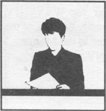
Late 1930s |
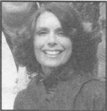
1960's |
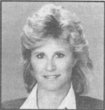
1960's |
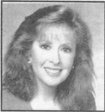
1960's |
 |
 |
 |
 |
Mrs. Harry Johnson |
Jane Chastain |
Jeannie Morris |
Donna de Varona |
1970's |
1970's |
1970's |
1980's |
 |
 |
 |
 |
Gayle Gardner |
Lesley Visser |
Leandra Reilly |
Robin Roberts |